Challengers Finals Event Data Updated
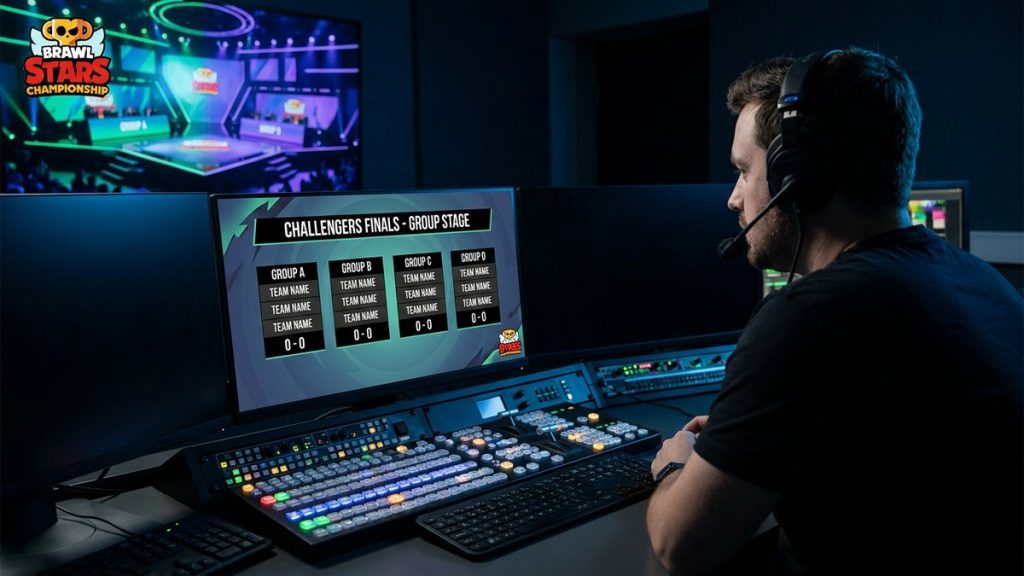
Brawl Stars Championship has updated the Challengers Finals event data, publishing an active global listing for a 12-contestant competition in the world-championship cup. The revision defines the tournament structure rather than supplying a finished-results report. It identifies a round-robin group stage with four groups and eight advancing contestants, alongside a single-elimination bracket type. The bracket material shown in the supplied first range contains uncompleted matches with 0-0 score lines on both sides, but the available material begins a second range before its match records are truncated. That distinction makes this a useful format and schedule reference while limiting any result-based reading to the first displayed range.
The official listing carries an estimated user figure of 100000 and marks the event as active in the global region. Its event rules divide match entries into two rounds: round one includes IDs 1 through 12, and round two includes IDs 13 through 19. The rules also mark IDs 17, 18 and 19 in round two differently from the earlier entries through their listed fP values, without explaining a competitive outcome or placement.
Two ranges have start times in the event data, while prediction timing is listed for range 1. The bracket data fully supplied for range 1 shows four groupings of three contestant identifiers. Each grouping has three pairings, which gives a compact view of the round-robin arrangement. No team names accompany those identifiers, so the listing does not establish named opening matchups. Nor does the shown material provide map results, player statistics, standings or final placement. The most reliable reading is that the update publishes a tournament framework and first-range pairing data, not a completed event narrative.

How the published format is organized
The format has two stated layers. The group stage is round robin, with 12 contestants divided across four groups and eight contestants set to advance. The event listing separately identifies the bracket type as single elimination. Together, those fields describe a route in which the group phase reduces the field before the elimination portion, but they do not identify the contestants who will advance. The round-one rules contain 12 match entries, while round two contains seven. Those counts are part of the stated event configuration and should not be converted into a completed-match total.
The supplied bracket records provide a detailed snapshot of range 1 only. Grouping 4e1seRCs0cbukfxjryvFB4 includes contestant IDs 80, 76 and 45, with pairings 80 versus 76, 80 versus 45, and 76 versus 45. Grouping 6nJkaOdtozZTAtAX4S8Uhd contains IDs 3, 78 and 52, producing the three corresponding pairings. A third grouping contains 38, 62 and 77, while a fourth contains 81, 7 and 79. In every one of the 12 supplied range-one match records, both contestant scores are 0 and the completed field is false.
That status is important because a bracket position and a match label can describe an event layout without documenting a played contest. The range-one records also show no skipped matches and no fantasy or extended designation. Their populate-from fields point to result none, reinforcing that the supplied records should not be treated as results. The material does begin a second bracket range, but it is truncated before those match records are available. As a result, the first range can be described precisely as uncompleted; the supplied material does not support an event-wide conclusion about all later matches or outcomes.
For readers checking the update quickly, the key separation is between format fields, schedule fields and the limited first-range match display. The format fields establish the 12-contestant field, four groups, eight advancing contestants and single-elimination bracket type. The schedule fields include two range start times and a prediction start time for range 1. The first-range bracket records then show the opening round-robin pairings by contestant identifier, all with 0-0 scores and incomplete status.
None of those categories supplies a group leader, qualifier, winner or named roster. The stream listings add a second practical reference point. They are attached to ranges 1 and 2 and use Twitch and YouTube. The listed languages are German, French, Italian, Spanish, Polish, Russian and Turkish. The entries identify channel titles including BroCast, Kuzan_TV, PiouPiouLover, PlayerD, Spiuk, Torii, Skiller Gaming, Oyunların Ustası, Ferre, NeaRz and Veni Gaming. These are listed viewing options by language and range; they do not confirm that every channel carries every match or that a broadcast has started. The list below summarizes the supported reader-facing takeaways, while the table keeps the tournament stages and their published details separate.
Event data at a glance
The updated listing is best read as an administrative and structural release for the Challengers Finals. It gives a clear numerical pathway from the group stage to the elimination bracket and makes the first range inspectable at match level. Within that supplied range, the four three-contestant groupings each contain a complete set of three pairings, yet every displayed contest remains incomplete at 0-0. This verifies the opening layout without creating an unsupported standings picture. The second range is present in the event schedule and bracket material, but its detailed match records are not fully supplied here. That boundary matters: the first range supports specific statements about pairing status, while later competitive status cannot be established from the truncated material. Readers can still use the update to understand how many contestants begin, how many are intended to advance, how the rounds are numbered, and which language-specific stream listings are attached to the two ranges. What remains unavailable in the supplied data is a named-team results account, a confirmed qualifier list or a final competitive outcome.
- Tournament pathway: 12 contestants enter four round-robin groups, and the listing designates eight contestants to advance into the single-elimination portion.
- First-range bracket status: the 12 supplied match records cover four groups of three contestant IDs; every displayed record is incomplete with a 0-0 score line.
- Viewing directory: stream entries span ranges 1 and 2 on Twitch and YouTube in German, French, Italian, Spanish, Polish, Russian and Turkish.

| Event component | Published reference |
|---|---|
| Group stage | Round robin with 12 contestants, four groups and eight advancing contestants. |
| Match rules | Round one lists IDs 1-12; round two lists IDs 13-19. |
| Supplied bracket detail | Range 1 fully shows 12 matches across four three-contestant groupings; all are incomplete at 0-0. |
| Schedule and streams | Two ranges have listed start times; prediction timing is listed for range 1, with Twitch and YouTube stream entries attached to the ranges. |
The Challengers Finals revision puts the tournament’s structure into focus: four round-robin groups feed eight contestants into a single-elimination phase within an active global Championship event. Its fully supplied opening range shows the group pairings without a recorded result, while the later range cannot be assessed from the truncated bracket material. The update therefore offers a dependable guide to format, first-range status and viewing listings rather than a basis for declaring winners.